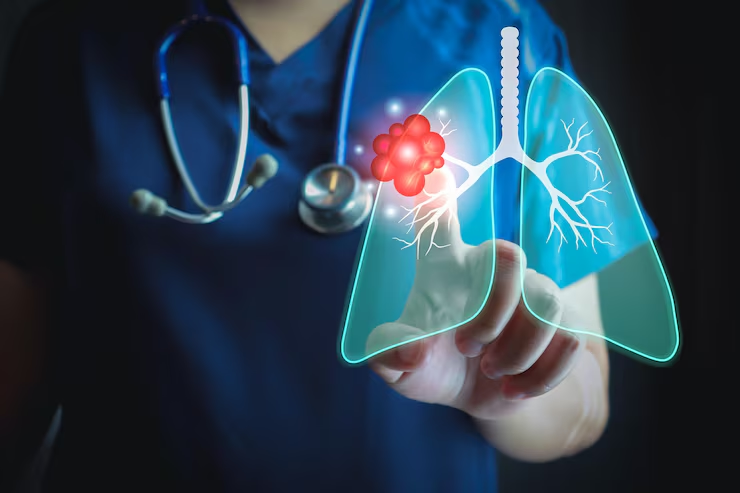
Lung cancer is the number one cancer killer — more deadly than breast, colorectal, and prostate cancers combined. The scary part? Most people don’t feel any symptoms until it’s already in an advanced stage, when survival chances drop dramatically.
The good news is that modern medicine now has a powerful, simple tool to catch it early: a preventive body scan called a low-dose CT scan.
What Is a Low-Dose CT Scan and Why Does It Matter?
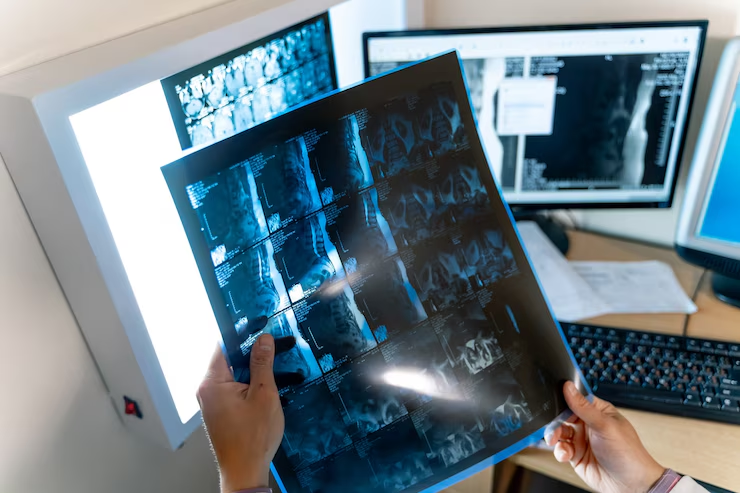
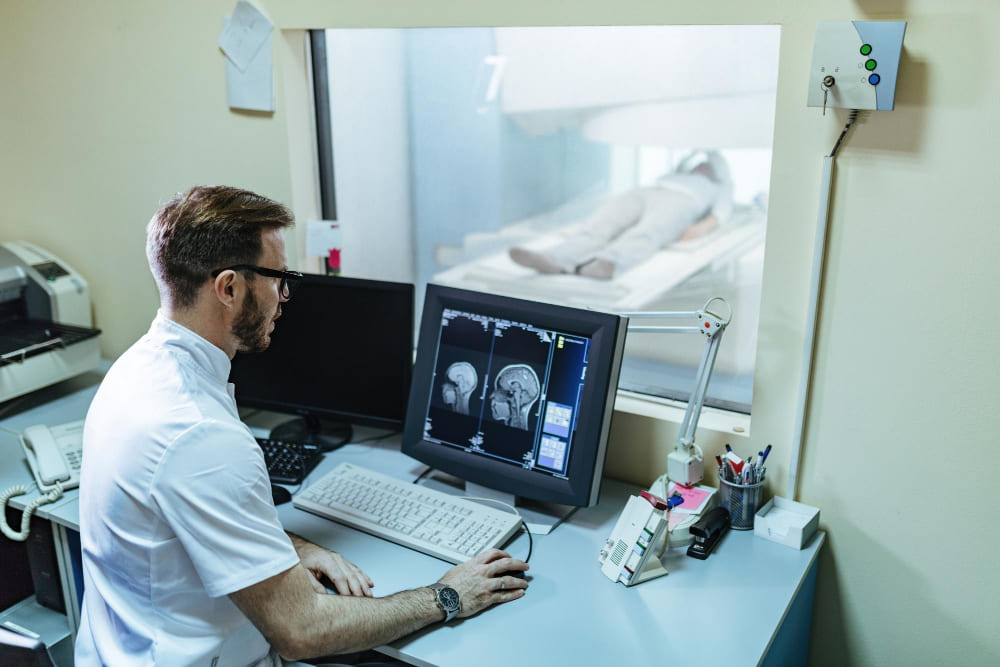
A low-dose CT scan is essentially a quick, painless X-ray of your chest that produces highly detailed images of your lungs. Unlike a regular chest X-ray, it can detect even tiny spots or nodules in the lungs — long before any symptoms appear.
Think of it as a smoke detector for your lungs: it alerts you to a potential problem before the fire gets out of control.
A landmark US study called the National Lung Screening Trial, involving over 50,000 people, proved that this type of preventive body scan reduced lung cancer deaths by 20%. That’s a remarkable result — comparable to what mammograms do for breast cancer.
Who Should Get Screened?
Current guidelines recommend annual low-dose CT screening for people who meet these criteria:
- Between 55 and 80 years old
- Have a smoking history of at least 30 pack-years (that means one pack a day for 30 years, or two packs a day for 15 years)
- Are either currently smoking or quit less than 15 years ago
- If you tick these boxes, you may be eligible for covered screening with no out-of-pocket cost. It’s worth checking with your insurance provider.
Is the Radiation Safe?
This is one of the most common concerns — and it’s a fair one. The good news is that low-dose CT delivers roughly one-sixth the radiation of a standard diagnostic CT scan. Research has confirmed that the image quality of a low-dose scan is just as reliable for detecting and tracking lung nodules as a full-dose scan — so you get the same valuable information with significantly less radiation exposure.
What Happens If Something Is Found?
Finding a spot on a lung scan sounds alarming, but it’s important to know that the vast majority of detected nodules are not cancer. In fact, more than 95% of positive findings turn out to be benign. Doctors use a structured system called Lung-RADS to categorize what they find:
- Category 1 or 2: Nothing worrying — just continue your annual scan
- Category 3: Probably harmless, but a follow-up scan in 6 months is recommended
- Category 4: Needs further investigation, such as an additional scan, a PET scan, or a tissue sample
This systematic approach ensures that every finding is handled appropriately — without unnecessary panic or invasive procedures.
Screening Is Not a Replacement for Quitting Smoking
It’s worth saying clearly: a clean scan does not mean you’re in the clear if you keep smoking. Screening is a safety net, not a green light to continue. Quitting smoking remains the single most effective thing you can do to reduce your lung cancer risk — and your doctor can help you with that.
Don’t Just Get a Scan — Make Sure It’s Read Correctly!
Getting the scan is only half the battle. Having it interpreted by an experienced, specialized radiologist is equally important. Guidelines require that only board-certified radiologists with significant chest CT experience review these scans. However, not all facilities offer the same level of expertise — and that’s where a radiology second opinion can make a real difference.
If you or a loved one has had a lung CT scan and you’re unsure about the results, or if a nodule was found and you want to be certain about the next steps, seeking a second opinion on CT scan results from a specialist is a smart and increasingly accessible option. Thanks to teleradiology services, you can now get a second opinion radiology review from a top expert without leaving your home — quickly and conveniently.
References
- Fintelmann FJ, Bernheim A, Digumarthy SR, Lennes IT, Kalra MK, Gilman MD, Sharma A, Flores EJ, Muse VV, Shepard JO. The 10 Pillars of Lung Cancer Screening: Rationale and Logistics of a Lung Cancer Screening Program. RadioGraphics. 2015;35(7):1893–1908. https://doi.org/10.1148/rg.2015150079
- Ono K, Hiraoka T, Ono A, Komatsu E, Shigenaga T, Takaki H, Maeda T, Ogusu H, Yoshida S, Fukushima K, Kai M. Low-dose CT scan screening for lung cancer: comparison of images and radiation doses between low-dose CT and follow-up standard diagnostic CT. SpringerPlus. 2013;2:393. https://doi.org/10.1186/2193-1801-2-393
- Gould MK. Lung-Cancer Screening with Low-Dose Computed Tomography. New England Journal of Medicine. 2014;371(19):1813–1820. https://doi.org/10.1056/NEJMcp1404071