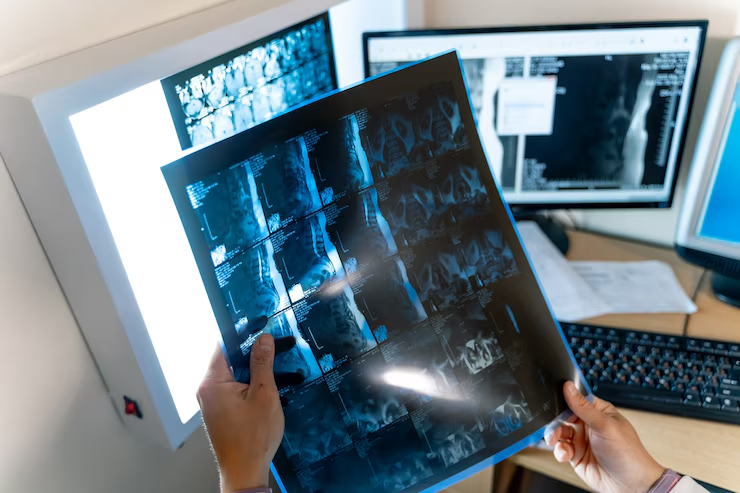
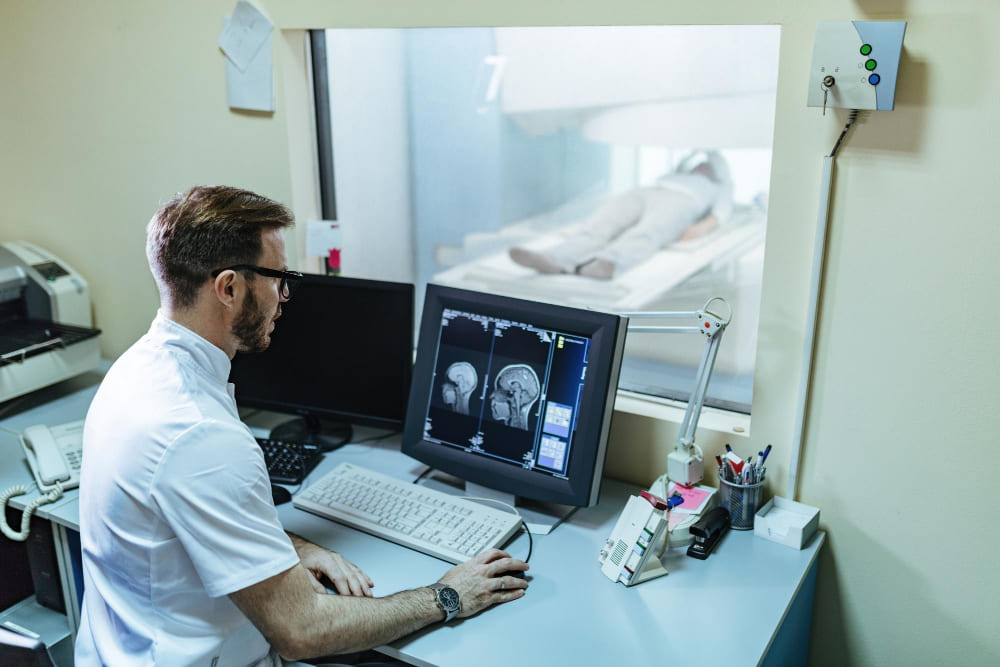
Whole-body MRI is a single scan that surveys the body from head to toe without using ionising radiation. It is increasingly offered as part of preventive health checks and as a staging tool in oncology, and patients are beginning to ask whether it belongs in their own care. This guide explains what the scan is, what it can and cannot do, and who is most likely to benefit.
What Makes Whole-Body MRI Different
Most medical imaging is targeted: a scan of the brain, the chest, the prostate. Whole-body MRI takes a different approach, it acquires images of the entire body in one sitting, typically over 30 to 40 minutes, and combines them into a single dataset that a radiologist can review.
Two features set it apart from CT or PET:
- No ionising radiation: MRI uses strong magnetic fields and radio waves, not X-rays, so the scan can be safely repeated for follow-up.
- Functional information, not just anatomy: Modern whole-body MRI includes sequences such as diffusion-weighted imaging that reflect how cells are behaving, not just how the tissue looks. That can flag abnormal areas before they are visible as obvious masses.
The trade-off is time and cost: a whole-body MRI takes longer than a targeted scan, and it requires careful interpretation by a radiologist experienced in this type of study.
What Whole-Body MRI Can Detect
Whole-body MRI is most useful for conditions that can spread through the body or affect multiple organ systems at once.
- Bone and bone marrow disease: It is particularly strong for diseases of the bone marrow such as multiple myeloma, where it can pick up early involvement that other scans miss.
- Prostate cancer spread: It can identify metastases in bone and lymph nodes, allowing full staging in a single study.
- Breast cancer monitoring: It can detect spread to bone and liver and is a useful option for younger or pregnant patients who need to limit radiation exposure.
- Ovarian cancer: It offers a more thorough look at the abdomen and pelvis and can characterise small or hidden lesions.
- Melanoma and whole-body metastases: It tracks disease across multiple organs and performs well in the liver and soft tissues.
- Lymphoma: It is sensitive to active disease and safe for repeated follow-up, which makes it attractive for younger patients and during pregnancy.
These are clinical strengths, not guarantees. A whole-body MRI does not detect every disease, and findings always need to be interpreted alongside symptoms, blood tests, and other investigations.
Who Should Consider Whole-Body MRI
You may be a candidate if you:
- Want a broad, radiation-free health check as part of a preventive plan
- Have a personal or family history of cancer and want closer surveillance
- Need ongoing monitoring for a known condition and want to avoid repeated radiation exposure
- Have a complex or multi-system condition that crosses anatomical boundaries
- Prefer a proactive approach and have discussed it with your clinician
Whole-body MRI is not a first-line test for the general population, and it is most valuable when there is a clear reason to look broadly.
Benefits at a Glance
- One scan instead of several appointments and separate studies
- No injections required in most protocols and no ionising radiation
- Non-invasive and well tolerated by most patients
- Repeatable for surveillance over months or years
- Used in leading oncology centres as part of staging and follow-up
Important Limitations
Whole-body MRI is powerful, but it is not a replacement for established, targeted screening tests. Mammography, colonoscopy, cervical screening, and skin checks each look for things that whole-body MRI is not designed to find. The scan works best as one component of a personalised screening strategy, decided with a clinician who knows your history and risk profile.
Findings on whole-body MRI also need careful follow-up. Some lesions turn out to be harmless (incidental findings), but they may still require further imaging or specialist review, which has its own costs and anxieties.
Frequently Asked Questions
Is whole-body MRI safe?
Yes. It uses magnetic fields and radio waves rather than ionising radiation, which makes it one of the safest imaging techniques available. The main contraindications relate to certain implanted devices and severe claustrophobia, both of which are checked before the scan.
How long does the scan take?
A typical whole-body MRI takes around 30 to 40 minutes. You lie still on the scanner table while the machine acquires images of each region in sequence.
Do I need a contrast injection?
Usually not. Most whole-body MRI protocols are performed without intravenous contrast. Contrast may be added in specific clinical scenarios, and your radiologist will let you know if it is recommended for your case.
Can it detect cancer early?
It can detect a number of cancers earlier than conventional imaging, particularly those that involve the bone marrow, lymph nodes, or soft tissues. It is not a universal cancer test, and some cancers are still better identified by dedicated, targeted studies.
Is it suitable for healthy people?
It can be used in selected individuals, especially those at higher risk because of family history, prior disease, or specific concerns. A consultation with a clinician helps decide whether the benefits justify the cost and the possibility of incidental findings.
How is it different from CT or PET scans?
There are three main differences:
- No ionising radiation, which makes repeated scans much safer
- Better contrast for soft tissue and bone marrow, where MRI tends to outperform CT
- Repeatable over time, which suits long-term monitoring
CT and PET still have important roles, for example, CT for lung nodules and acute chest or abdominal imaging, and PET for certain metabolic questions in oncology.
Will it replace all other tests?
No. Whole-body MRI complements rather than replaces targeted screenings such as mammography or colonoscopy, each of which is optimised for a specific question.
What happens if something is found?
You will receive a clear follow-up plan from the reporting radiologist. Depending on the finding, this may involve targeted imaging of one area, blood tests, or referral to a specialist. Many findings turn out to be benign, but the pathway forward should always be discussed with your clinician.
If you are weighing up whether whole-body MRI fits your situation, a consultation with a subspecialist radiologist on Hospitual can help you decide what scans make sense for you.
Reference
Summers P, Saia G, Colombo A, et al. Whole-body magnetic resonance imaging: technique, guidelines and key applications. ecancer. 2021;15:1164. doi:10.3332/ecancer.2021.1164